|
Seems like cars have always had radios, but they didn't.
Here's the story: One evening, in 1929, two young men named William Lear and Elmer Wavering drove their girlfriends to a lookout point high above the Mississippi River town of Quincy, Illinois, to watch the sunset. It was a romantic night to be sure, but one of the women observed that it would be even nicer if they could listen to music in the car. Lear and Wavering liked the idea. Both men had tinkered with radios (Lear served as a radio operator in the U.S. Navy during World War I) and it wasn't long before they were taking apart a home radio and trying to get it to work in a car. But it wasn't easy: automobiles have ignition switches, generators, spark plugs, and other electrical equipment that generate noisy static interference, making it nearly impossible to listen to the radio when the engine was running. One by one, Lear and Wavering identified and eliminated each source of electrical interference. When they finally got their radio to work, they took it to a radio convention in Chicago. There they met Paul Galvin, owner of Galvin Manufacturing Corporation. He made a product called a "battery eliminator", a device that allowed battery-powered radios to run on household AC current. But as more homes were wired for electricity, more radio manufacturers made AC-powered radios. Galvin needed a new product to manufacture. When he met Lear and Wavering at the radio convention, he found it. He believed that mass-produced, affordable car radios had the potential to become a huge business. Lear and Wavering set up shop in Galvin's factory, and when they perfected their first radio, they installed it in his Studebaker. Then Galvin went to a local banker to apply for a loan. Thinking it might sweeten the deal, he had his men install a radio in the banker's Packard. Good idea, but it didn't work. Half an hour after the installation, the banker's Packard caught on fire. (They didn't get the loan.) Galvin didn't give up. He drove his Studebaker nearly 800 miles to Atlantic City to show off the radio at the 1930 Radio Manufacturers Association convention. Too broke to afford a booth, he parked the car outside the convention hall and cranked up the radio so that passing conventioneers could hear it. That idea worked -- He got enough orders to put the radio into production. WHAT'S IN A NAME That first production model was called the 5T71. Galvin decided he needed to come up with something a little catchier. In those days many companies in the phonograph and radio businesses used the suffix "ola" for their names - Radiola, Columbiola, and Victrola were three of the biggest. Galvin decided to do the same thing, and since his radio was intended for use in a motor vehicle, he decided to call it the Motorola. But even with the name change, the radio still had problems: When Motorola went on sale in 1930, it cost about $110 uninstalled, at a time when you could buy a brand-new car for $650, and the country was sliding into the Great Depression. (By that measure, a radio for a new car would cost about $3,000 today.) In 1930, it took two men several days to put in a car radio -- The dashboard had to be taken apart so that the receiver and a single speaker could be installed, and the ceiling had to be cut open to install the antenna. These early radios ran on their own batteries, not on the car battery, so holes had to be cut into the floorboard to accommodate them. The installation manual had eight complete diagrams and 28 pages of instructions. Selling complicated car radios that cost 20 percent of the price of a brand-new car wouldn't have been easy in the best of times, let alone during the Great Depression. Galvin lost money in 1930 and struggled for a couple of years after that. But things picked up in 1933 when Ford began offering Motorola's pre-installed at the factory. In 1934 they got another boost when Galvin struck a deal with B.F. Goodrich tire company to sell and install them in its chain of tire stores. By then the price of the radio, with installation included, had dropped to $55. The Motorola car radio was off and running. (The name of the company would be officially changed from Galvin Manufacturing to "Motorola" in 1947.) In the meantime, Galvin continued to develop new uses for car radios. In 1936, the same year that it introduced push-button tuning, it also introduced the Motorola Police Cruiser, a standard car radio that was factory preset to a single frequency to pick up police broadcasts. In 1940 he developed the first handheld two-way radio -- The Handy-Talkie for the U. S. Army. A lot of the communications technologies that we take for granted today were born in Motorola labs in the years that followed World War II. In 1947 they came out with the first television for under $200. In 1956 the company introduced the world's first pager; in 1969 came the radio and television equipment that was used to televise Neil Armstrong's first steps on the Moon. In 1973, it invented the world's first handheld cellular phone. Today Motorola is one of the largest cell phone manufacturers in the world. And it all started with the car radio. WHATEVER HAPPENED TO the two men who installed the first radio in Paul Galvin's car? Elmer Wavering and William Lear, ended up taking very different paths in life. Wavering stayed with Motorola. In the 1950's he helped change the automobile experience again when he developed the first automotive alternator, replacing inefficient and unreliable generators. The invention lead to such luxuries as power windows, power seats, and, eventually, air-conditioning. Lear also continued inventing. He holds more than 150 patents. Remember eight-track tape players? Lear invented that. But what he's really famous for are his contributions to the field of aviation. He invented radio direction finders for planes, aided in the invention of the autopilot, designed the first fully automatic aircraft landing system, and in 1963 introduced his most famous invention of all, the Lear Jet, the world's first mass-produced, affordable business jet. (Not bad for a guy who dropped out of school after the eighth grade.) Sometimes it is fun to find out how some of the many things that we take for granted actually came into being! AND It all started with a woman's suggestion!!
0 Comments
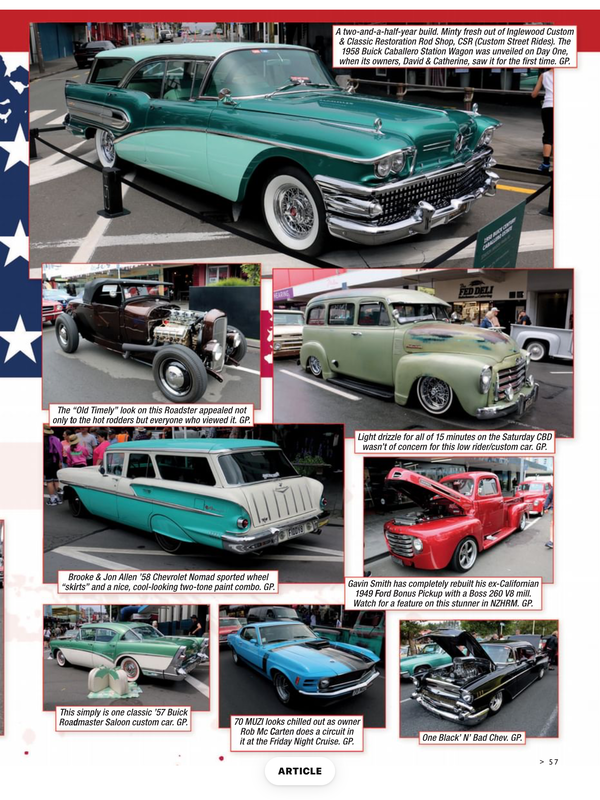
We signed up for this event back in August 2025 not knowing what we in for. Friends in Wanaka kindly put us up and we got in early with Cook Strait bookings to get the discount and later worked out a ‘plan’ for Motels on the way down. AMOC seemed as though there might be a few of us from the Club but as time went on only two cars entered from Auckland. There was a MUSTANG STAMPEDE arranged at the Ayr Classic Event so ‘yes’ that would be us. A garden-house show in Wanaka and the ‘Girls’ were arranged to do that while I spent several days cleaning and readying the ‘old horse’. Stone chips and tar blobs aplenty but all in a days work having always prepared cars for Concours events at this time of the year. The man-made lake with terraces making it ideal for car displays and other events. Lamborghinis, McLarens, and my favourite Porsche, a 996 Turbo “S” reflect in the lake with the Otago hills in the background. The venue cannot be described as anything but amazing. Entrepreneur, Chis Meehan of WINTON Investments is reputed to have spent $230 million developing this magnificent events site and it has no equal in New Zealand. The Bakehouse, Billy’s, The Burr Bar, and R.M.Produce are all there to look after your ‘culinary’ wants and if marriage is on your list, there is The Barrel Room, but don’t expect ‘cheap’. One of the most looked forward to was the Sunday Drive Auction and a few surprises there. A very nice 1957 Chev Truck got very little interest, but a 1950 Ford F100 in shiny black went mad with several bidders and sold for $102,000. A Porsche 356SC presented very well and enthusiastic bidding went to $360,000. Well sold in New Zealand. Mustang Stampede promised over 30 cars but only 21 turned up and we wondered if the fact we had to leave the cars there over the whole 3 days made it hard to manage. At least four of the Mustangs have been previous winners at Concours events but did not figure in the prize list. Con Faber was first at Ellerslie Masters Class in 2024 and I would have thought the Boss 302 is better now. However the 2025 white Shelby Replica they called a GT350 of Malcolm Shankey won best Mustang. The car was on the Matamata Show stand and was trailered down wrapped in bubble wrap to protect it during its travels down South. I did not count the Ferraris who were the featured marque this year but there was reputed to be 50 . All I can say is that there was a lot of RED. What you would do with a Ferrari Speedster I do not know but it suited the show in its gun metal coloured paint. There was plenty of variety in the awards and amongst several prize winners was Paul Halford winning “Maranello Magic” with his 1955 Ferrari, “Post European” Porsche 964 of Gary Cliff, and John Baltimore with his beautifully restored1956 Monza Ferrari Sports-racing car that was infamous for being the car Ken Wharton was killed in at Ardmore in 1957. That car had, at one stage a Corvette motor and was owned by Ken Smith, the well known motor racing ace. The highlight of the Sunday Drive Auction for me must have been the Lycoming Special. Bidding starting at $80,000 and must almost be an insult as this car was raced by Bruce Mclaren and famously won NZ Sports Car and Race championships far and wide. It is well revered not only here but in USA amongst Car and Plane enthusiasts with its aero engine upside down and back to front. Built in the 60’s by Ralph Watson it has an all encompassing history in Motorsport. An historic race car and a racing sports car when fitted with its cycle like mudguards. All in all a superb weekend in the beautiful Otago weather. Good vibes, plenty of enthusiastic people enjoying cars, wine, food and the outstanding AYRBURN. Check out the photo of the reflection in the Radiator Grille of last year's winning Rolls Royce. Page from the latest issue of NZ Hot Rod Magazine reporting on the 2025 Toy Run at Vellenoweth Green last December. It features not one but four of our club member's cars. Alex Ross' Pontiac Catalina, Terry Costello's Dodge Custom Royal, Grant Taylor's Fairlane Skyliner Retractable, and Russell Wilson's Pontiac Star Chief.
Now that our son and his family have moved down to Papamoa, we don’t get to see them very often. We organized a weekend away to visit and play with our two young grandsons, and of course I combined this with a car show, as you do. The Bay of Plenty Mustang Club’s annual All USA Day was held on Sunday, November 16, which was a cracker of a day weatherwise, unlike the days leading up to and the day after which were showery and sometimes very wet. This is the show that our club used as a weekend run away many years ago, and is a great little event held at the Classic Flyers Museum grounds at Tauranga airport. There were a lot of Mustangs on display as you would expect, along with a heap of Corvettes as the Auckland Corvette Club were also in attendance. A couple of hours by myself wandering around the displays was a great way to spend some me time in the sun, after a full on Grandkid’s weekend. Cheers, Russell Wilson Vehicle Standards Compliance Amendment (2025)
12 Month WoF & CoF 31 July 2025 Annual WoFs for vintage vehicles is common sense The NZ Federation of Motoring Clubs (FoMC) is celebrating the announcement from the Minister of Transport that vintage vehicles and motorcycles aged over 40 years will only need to obtain a Warrant of Fitness (WoF) once a year from Monday, 1st September 2025. FoMC President Garry Jackson says “This is a common-sense decision that will benefit some 128,000 owners of 40 year and older vehicles. Vintage vehicles are well-maintained by enthusiast owners and do much lower annual mileages compared to newer vehicles built from 2000-on, but up until now required WoF’s every six months compared with those newer vehicles with annual tests. This was an anomaly that not only didn’t make sense to owners but also resulted in considerable increased costs and inconvenience.” “The Federation has campaigned for this change for several years, and feedback from clubs and vintage vehicle owners shows this was the number one issue they wanted addressed,” Mr Jackson says. Data on WoF inspections shows that vehicles aged over 40 years have the lowest WoF failure rate than any other decade, even lower than vehicles under 10 years of age. Crash statistics also show that very few vehicles aged over 40 are involved in serious crashes where vehicle condition is a contributing factor. Ministry of Transport statistics shows that cars aged over 40 years travel just 2,852 km per annum on average compared to 10,136 km for vehicles already subject to an annual WoF. An FoMC nationwide survey in 2024 showed that some classic vehicles travel just a few hundred kilometres between 6-monthly WoFs,” Mr Jackson added. The government’s announcement also includes 12 month Certificate of Fitness (CoF) terms for privately owned heavy motorhomes, extended from 6-monthly currently. This major initiative has long-been sought by Federation member "The NZ Motor Caravan Association (MCA)". Mr Jackson says. “Like vintage cars and motorcycles, but unlike rental campervans for example, private motorhomes also do low annual mileages. CoFs are more expensive and there are also fewer CoF testing stations so it can be quite time-consuming for owners to obtain them. This sensible change will save private motorhome owners a lot of time and several hundred dollars a year.” The Federation of Motoring Clubs was founded in 1995 and comprises 151 clubs, including the Vintage Car Club of NZ, the NZ Hot Rod Association, and the NZ Motor Caravan Association. The total reach of the Federation is almost 300 clubs and branches, comprising 142,895 members and 126,095 vehicles. Further, and importantly, in 2024 the Federation published NZ’s first ever Historic and Classic Vehicle Research Survey which quantified the strength of the sector in terms of the number of owners and vehicles, and the headline grabbing figure of a total economic footprint of $16.5 Billion. President Garry Jackson adds …. “We have no doubt that today’s Government announcements in many ways recognise the strength that the sector represents in NZ”. ENDS Howdy all Click on the Youtube video below to see the fun Steve Driver and I had on the Irishman Creek Rally 2025. Steve Driver and I traveled from Auckland in the North Island to Christchurch in the South Island with a Ferry Crossing from Wellington to Picton. We had deliveries to friends in the South Island, a complete Model A diff for Garry, an overdrive for Ross, an overdrive for Dave and a ring and pinion. Steve needed a pick up wellside made by Glen, this went on the back of our newly named Jack Daniels Pickup ( Blackjack Delivery Co.) for the return trip home. They say there was 207 vintage cars (older than 1931) entered in the Rally.There were many makes and models including Austin 7 sports, Dodges, Model T Fords, Chryslers, Rolls Royces etc. and 97 Model A Fords. Steve and I were in the 1930 Model A pickup with the Jack Daniels signage on the door. Simon the photographer was traveling with Russell Sherwin in the Model A pickup with Sherwin Manor signage on the door, Russell loaned Edgar his Model A coupe, Edgar lost the radiator cap although that never stopped him completing the event, Edgar came up with heaps of excuses as you will see. Going through a watercourse we picked up part of an old file causing a flat tyre, a quick wheel change fixed that, Steve blamed Andrew Mehrtens for throwing tools into the river - yeah right. We were very lucky with three days of clear skies as it was forecast for a heavy polar blast from the South with heavy snow, this arrived after we had arrived back home with many roads closed and travellers being rescued. Enough from me, check out the video and some photos I have taken in the attachment. Cheers, Terry C Your browser does not support viewing this document. Click here to download the document. ACCCA encourages all members to take part in a very brief online survey being conducted by the NZTA as to the proposed 12 month WOF period for cars older than 40 years.
Note this survey closes on 4th April, so don't miss out on your chance to have your say. Remember, there are not many owners of cars older than 40 years, so there aren't that many of us so it's going to take a number of responses to influence the decision. Click on this link to read about the proposed changes: fomc.nz/12-month-wof-cof/ Click on this link to do the online survey: surveys.nzta.govt.nz/jfe/form/SV_232l6GMC4NCLLgi |
Categories
All
Archives
April 2026
|